
Floating Blinds In the Prairies potholes
This workshop is unlike any other, and the uniqueness cannot be overstated. Nothing about this workshop is typical of a photography tour. This is hardcore wildlife photography that will revolutionize the way you see and think and approach being in the field.
For starters, this workshop takes place in the remote stretch of North Dakota known collectively as the prairie potholes. If you have never heard of this area, you are not alone. Though this location is one of the most extraordinary bird photography hotspots on the continent, it’s completely off the radar for most photographers.
The prairie potholes region of North America is one of the most ecologically unique and important regions of both the United States and Canada. Born of the last ice age when the great Laurentide Ice Sheet began to retreat, gouging the Earth, and pockmarking the landscape like so many millions of dimples on a golf ball, the prairie potholes is now a vast mosaic of wetlands in an otherwise very dry place. You can think of it all as an oasis in a desert. And as such, the region is often referred to as the “duck factory” of America, where nearly 80% of North America’s waterfowl are born.
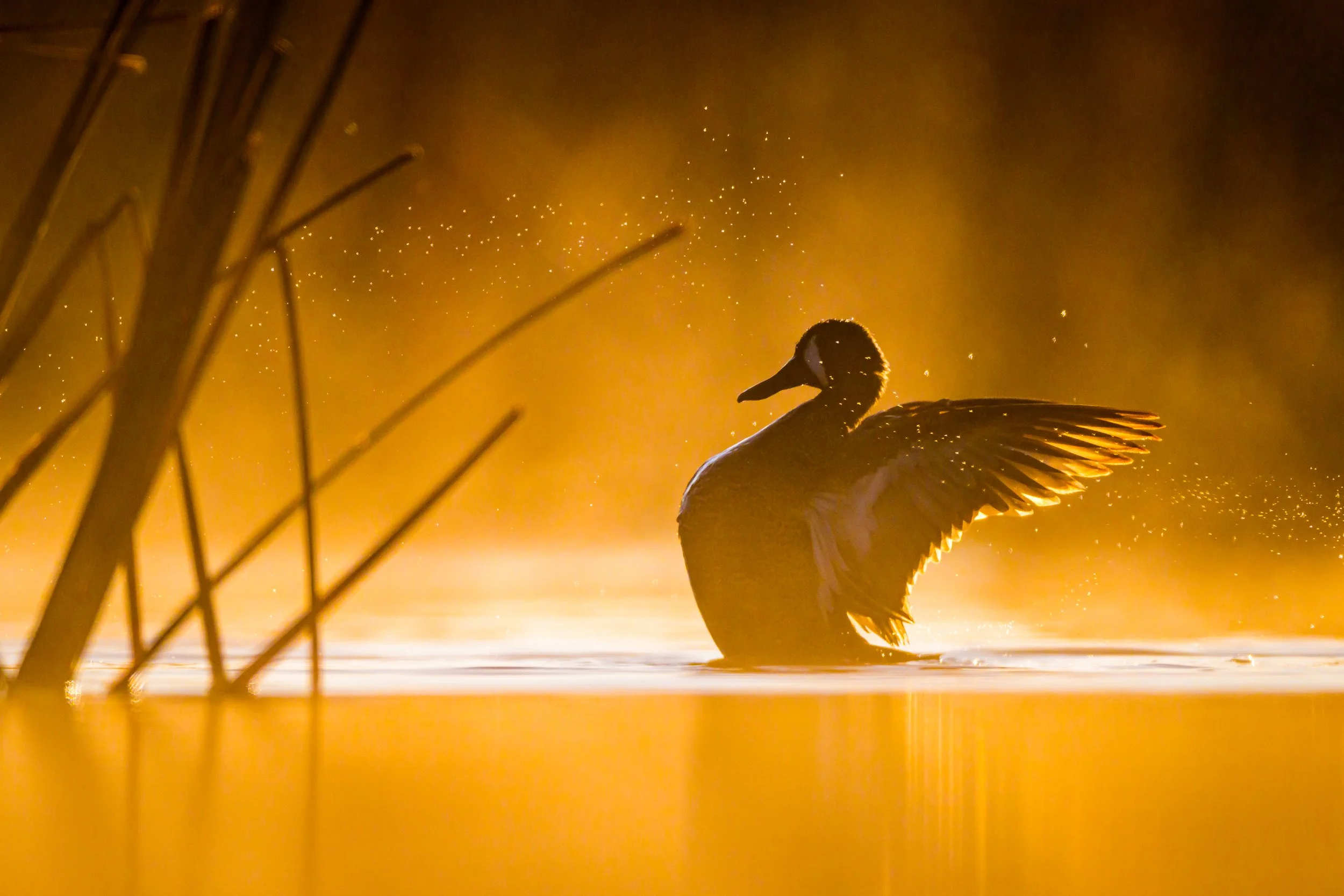
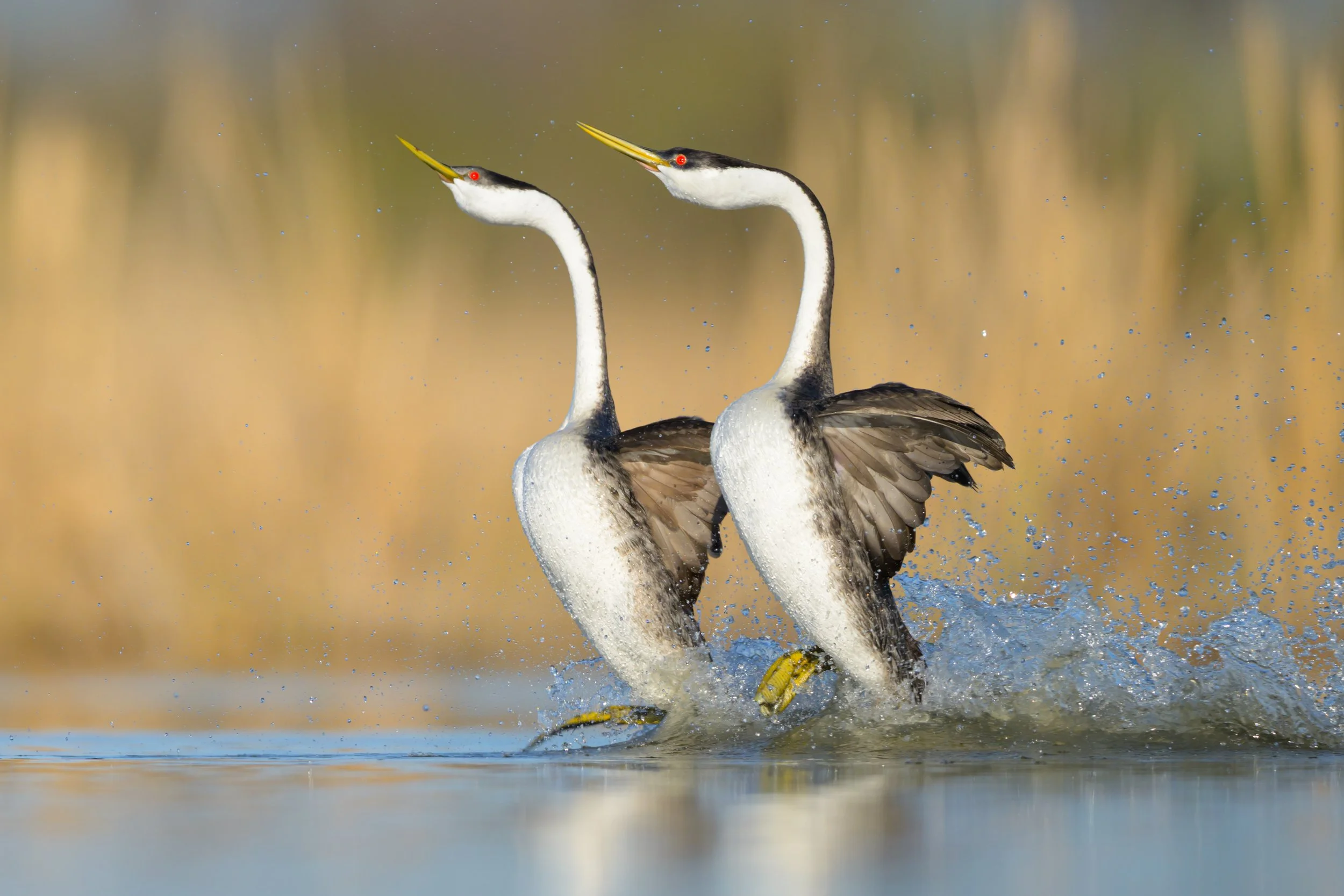
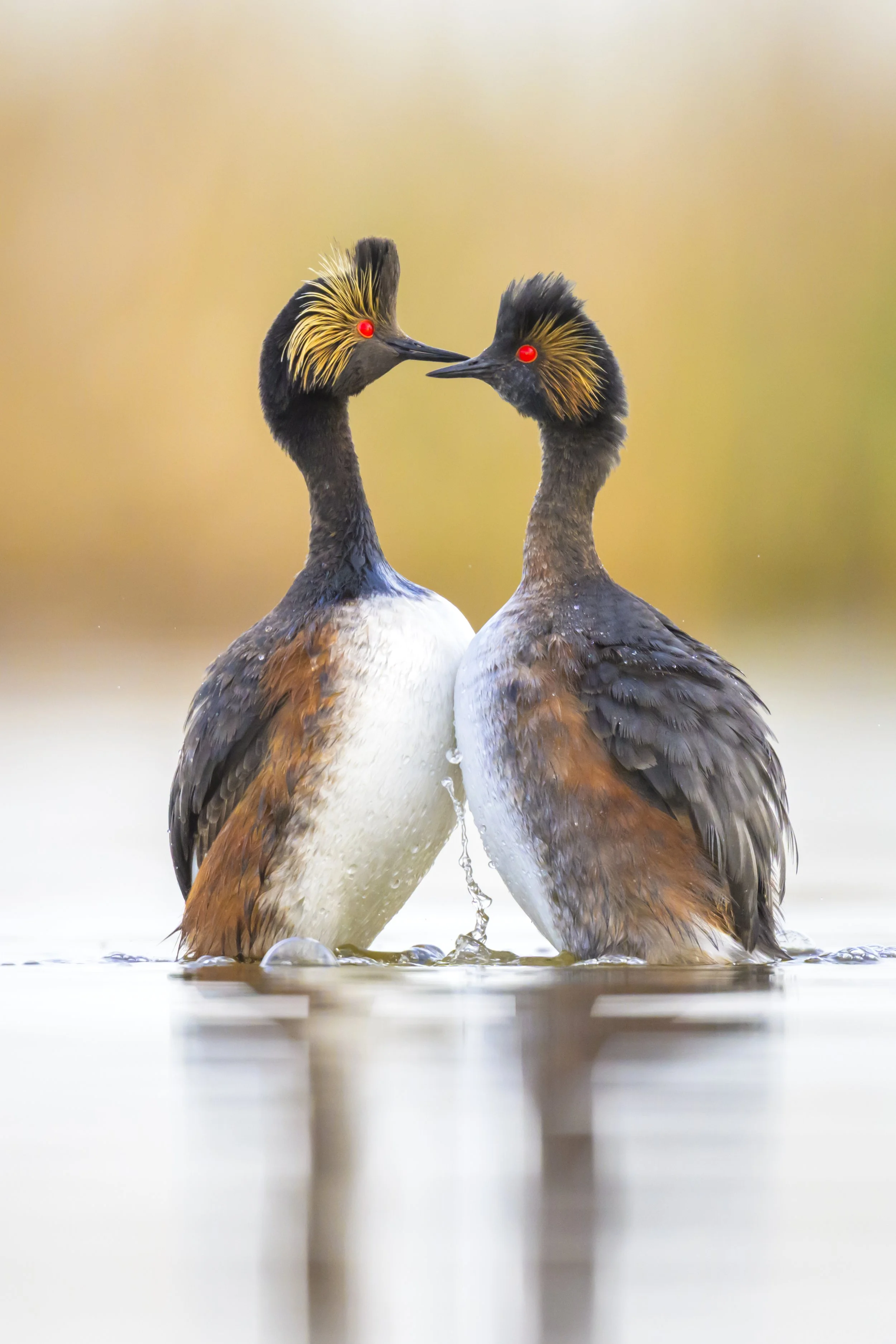
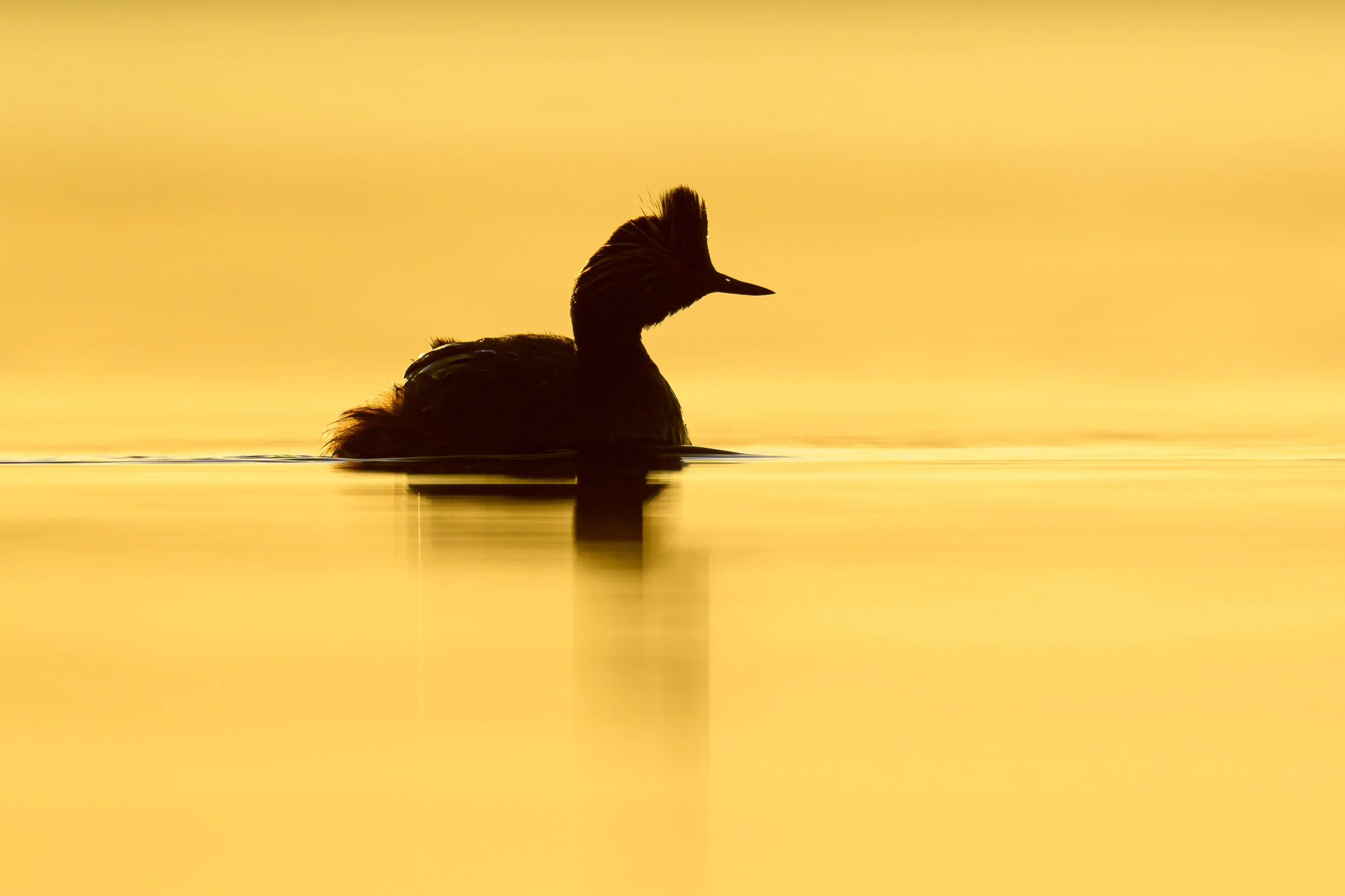
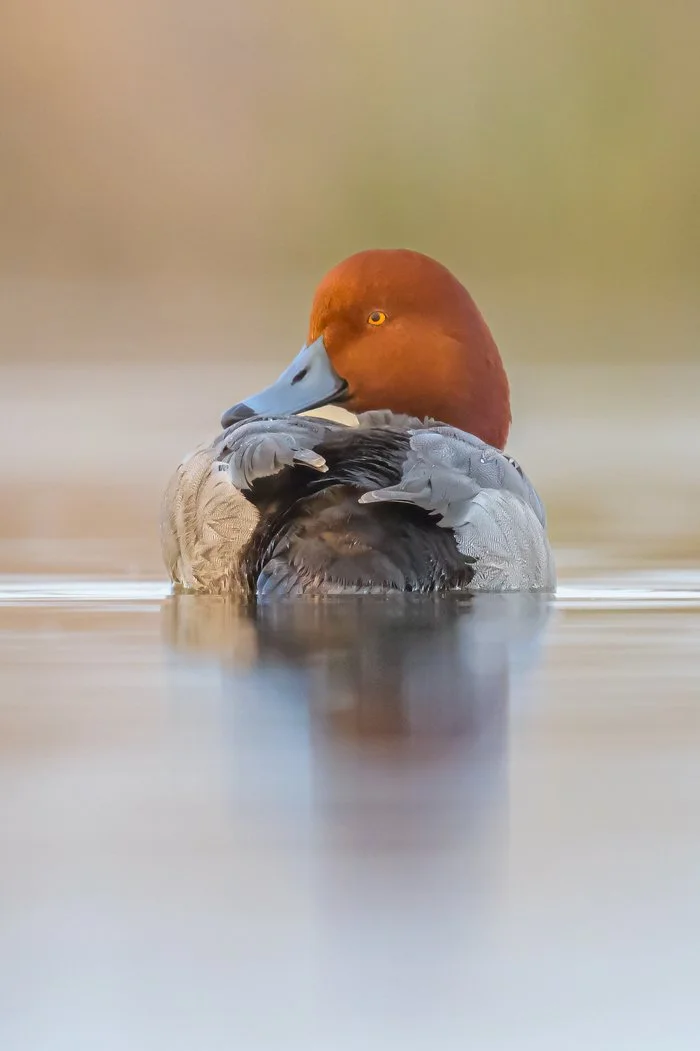
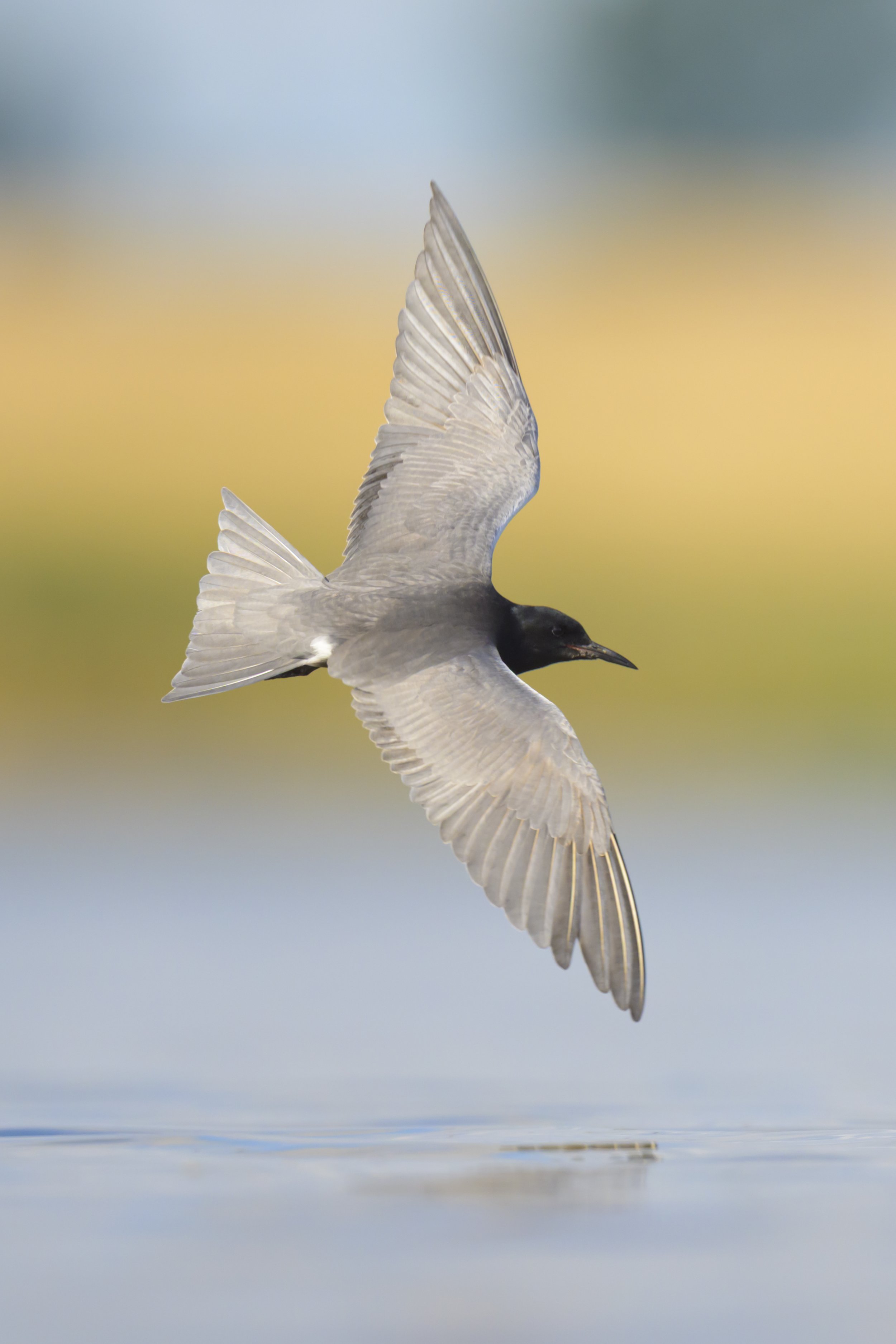
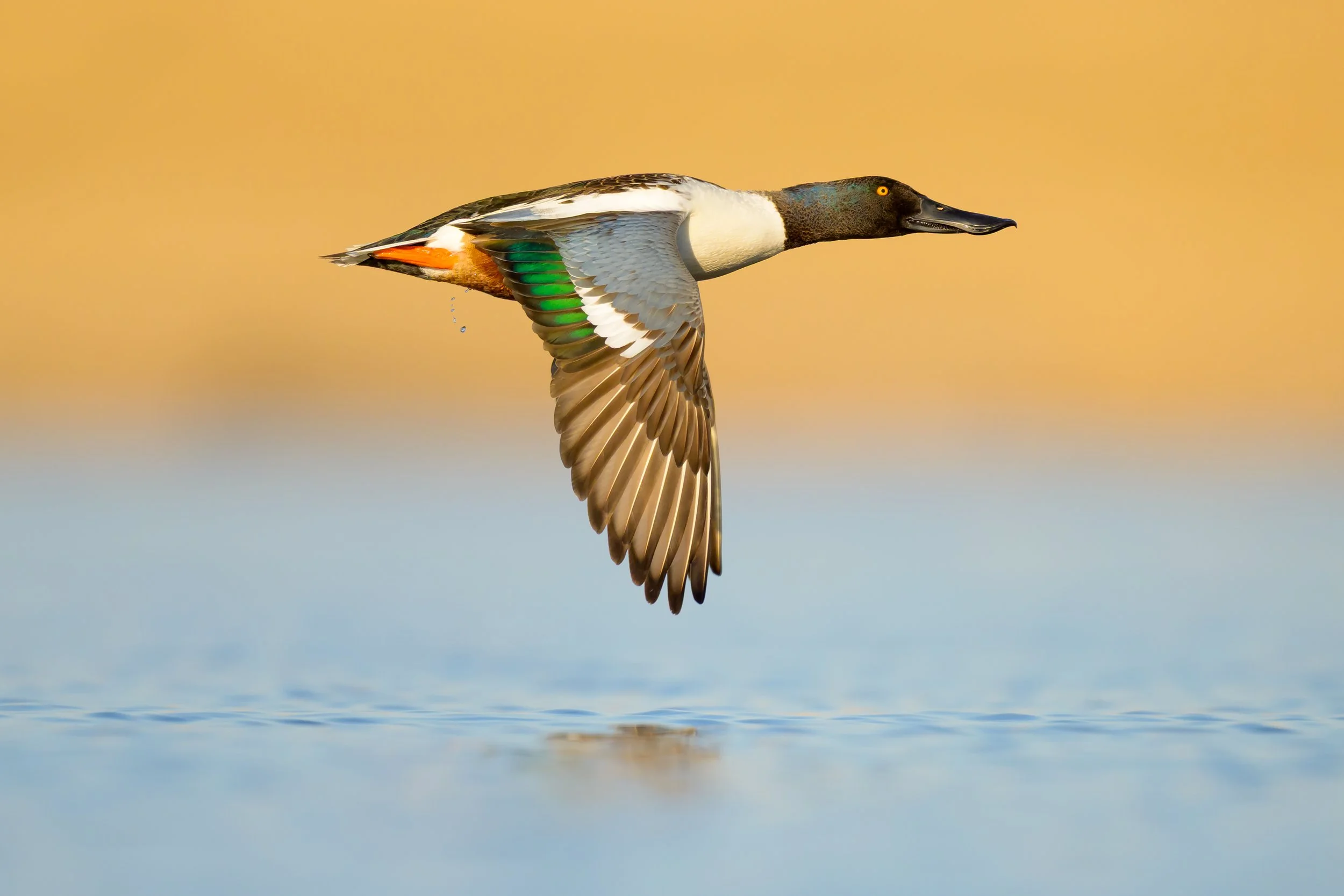
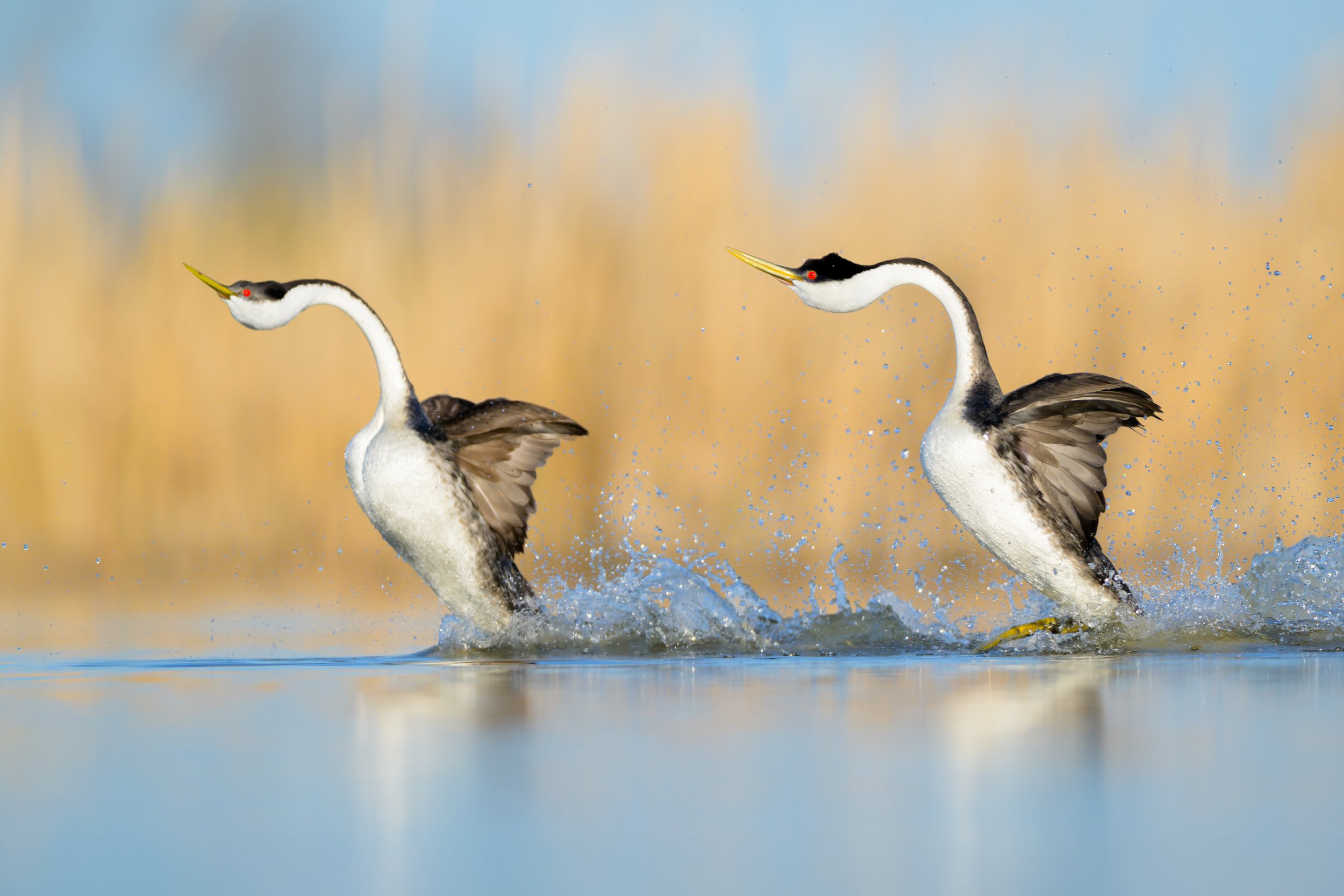
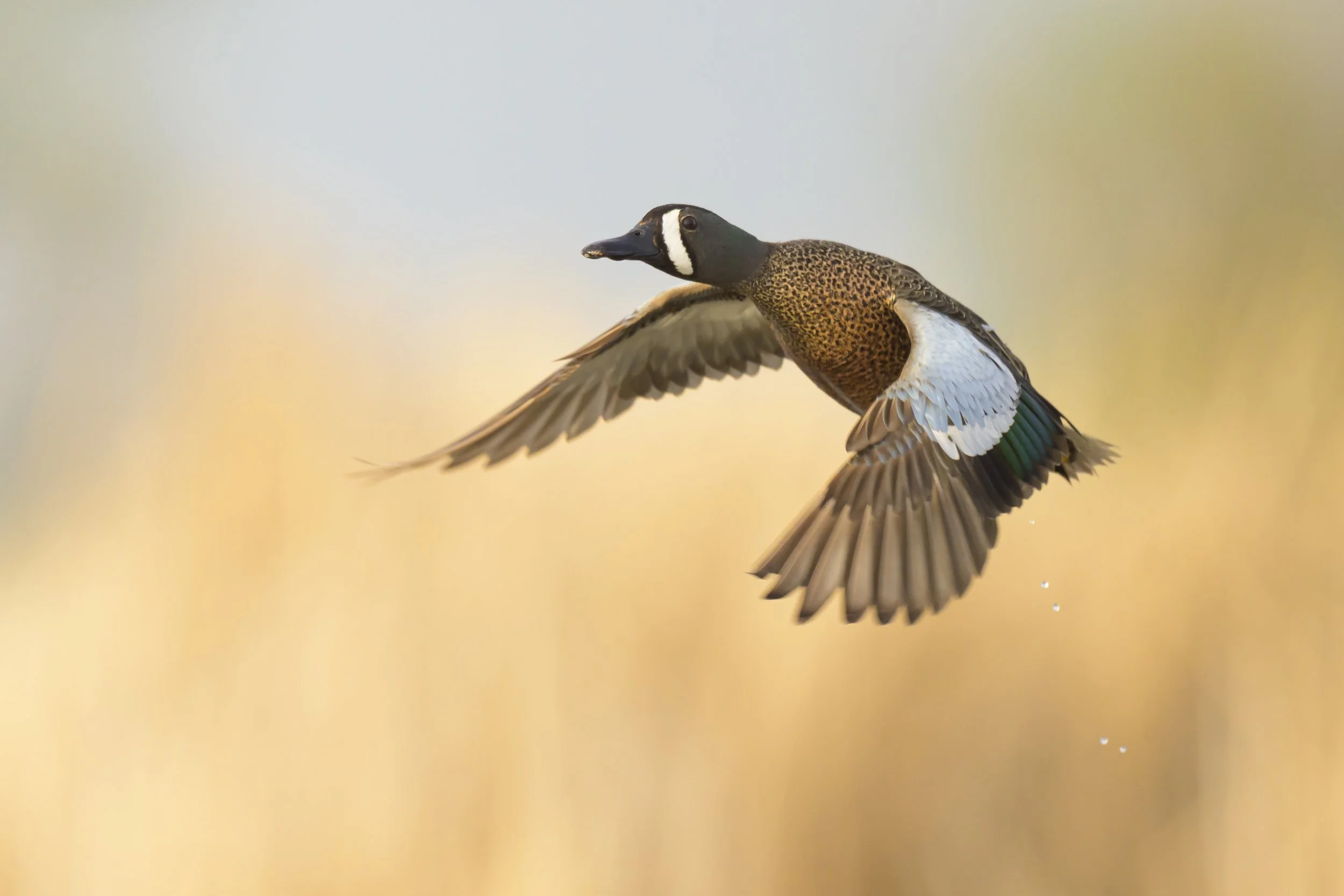
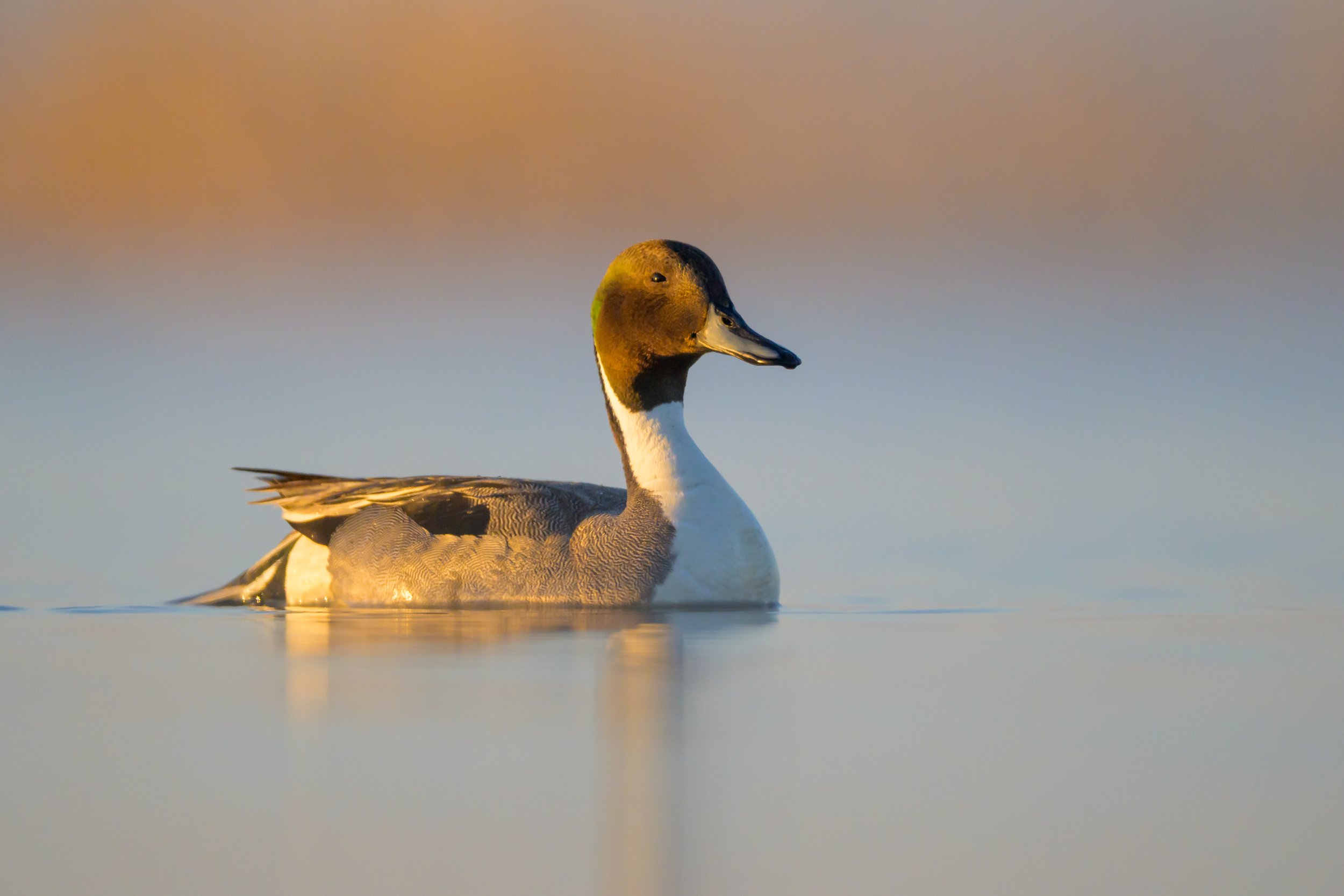
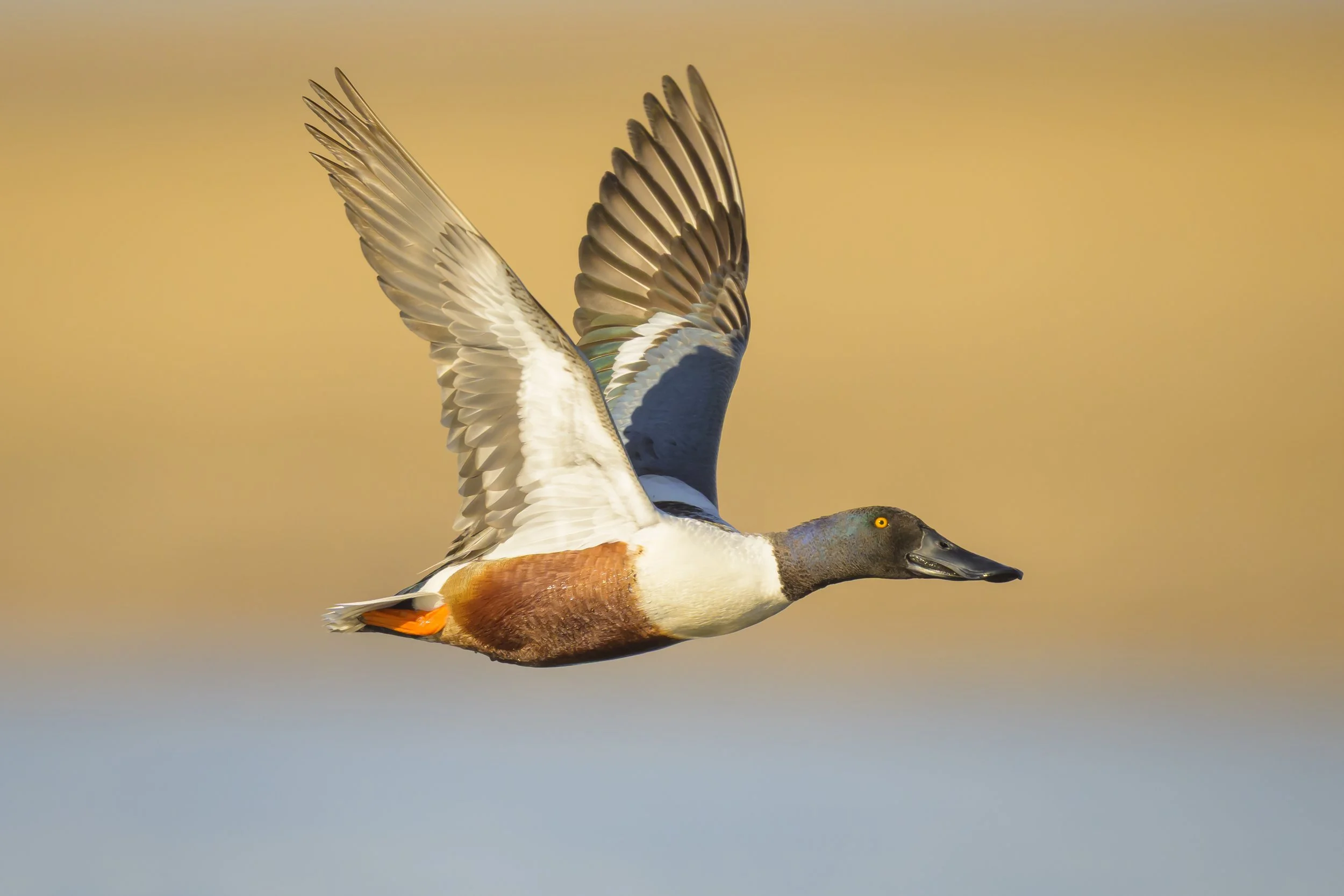
While waterfowl will factor into this workshop with the likes of blue-winged teal, redhead, canvasback, ruddy ducks, northern shovelers, pintails, and more, we will also be there in time to capture the matting dances of the various species of grebes such as eared, western, Clark’s, and red-necked. Other species of birds will inevitably find their way into your viewfinder such as yellow-headed blackbirds and American avocets, as well.
Then there’s the floating blinds themselves.
Floating blinds float atop the water around you. You do not float on top of them. They are stable, safe, and have secure platforms where we attach tripod heads and long lenses. Designed to resemble a muskrat hut or a clump of cattails, these devices are so good at keeping wildlife at ease that it’s not uncommon for birds to land on top of you to preen. Floating blinds are tools that give us unparallel access to the bird life of these marshes as we move about, lenses eye level with our subjects, through the shallow creeks in the marsh or at the edge of open water.
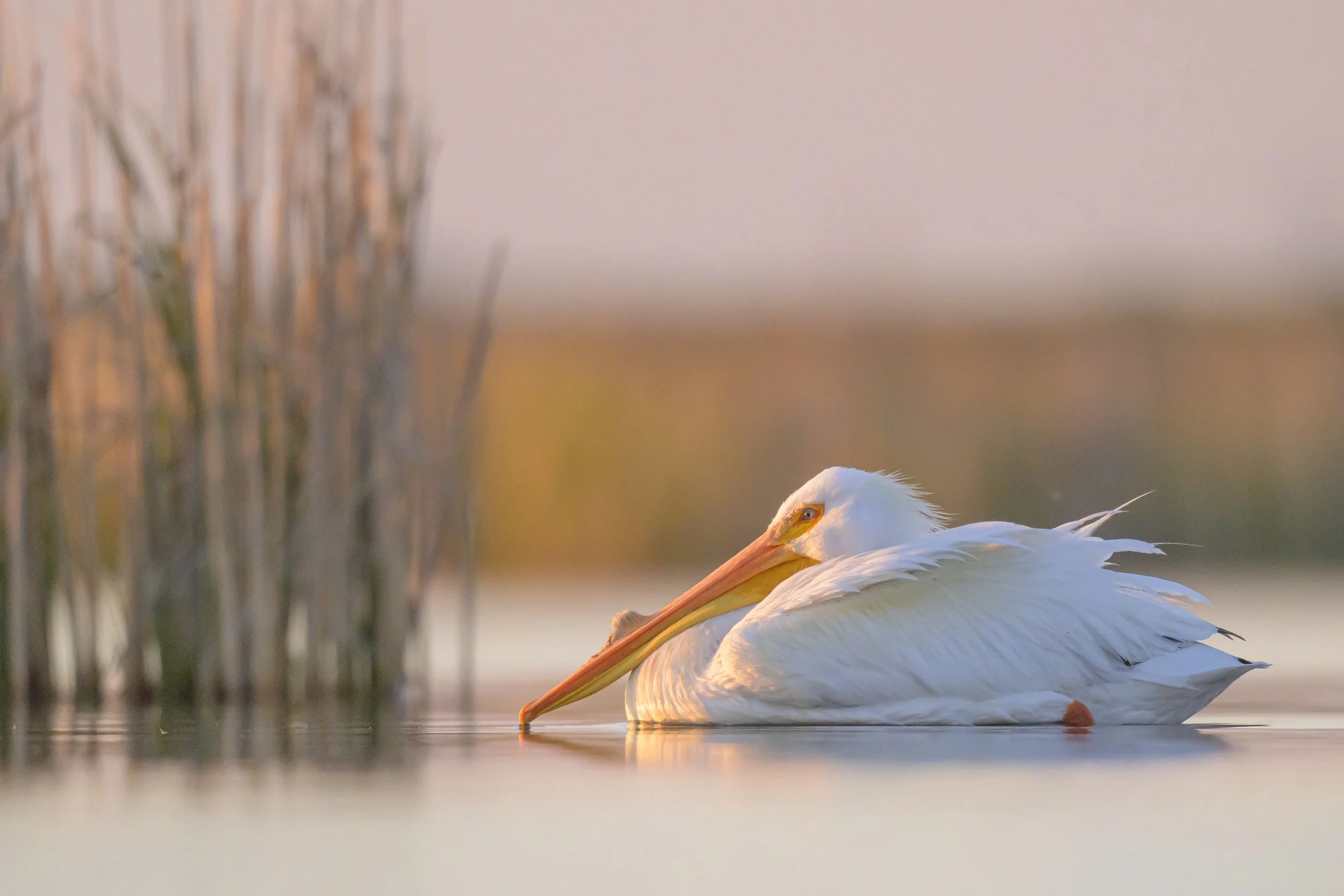
Working in a location like this and from the floating blinds equates to extraordinary photography. Many photographers strive create a fine art like feel to their work. On this workshop, those opportunities will be handed to you on a silver platter.
Because of the uniqueness of this workshop and the gear that we use, we will provide participants with floating blinds to both use and keep afterwards. So, if you don’t have a floating blind, don’t worry. We have one for you. And likewise, if you do wish to bring your own floating blind with you, we will deduct the cost of the blind from the price of the workshop.
The experience of photographing like this is incomparable to any other.
Participants will be divided into groups of three. And each group will work in different locations each day, with both Jared Lloyd and co-leader alternating groups throughout the workshop.
The Basics
Dates:
May 22 - 29, 2027 | SOLD OUT
Cost: $8000
Deposit: $2000
Number of Participants: 6
Workshop Leaders: Jared Lloyd
Lodging: Single occupancy included
Included:
Classroom Session
5 days of mind-blowing bird photography
Floating blind which is yours to keep after the workshop!
All lodging in single rooms
Not Included
Chest Waders
Meals
Airport: Bismarck Airport, North Dakota (BIS)
Location: Bismarck, North Dakota
Skill Level: Intermediate - Advanced
Physical Difficulty: Moderate
Frequently Asked Questions
What are floating blinds?
As the name suggests, floating blinds are designed specifically for wildlife photography and float AROUND you as you move through or sit in the water. You do not float on them. These highly specialized tools are designed to allow us to work at eye level and very close to wildlife subjects that would be extraordinarily challenging to do so otherwise.
The experience alone is amazing. And the photographic opportunities these blinds create are unparalleled.
No. We will provide you with a floating blind to use and it will be yours to keep after the workshop. There are several different commercially available floating blinds available - all shipped in from Europe. The ones that we use on this workshop are lightweight, collapsable, and designed specifically for travel. This means you will be able to easily fly back with your new blind.
Do I need my own floating Blind?
Is this safe?
Wildlife photography workshops are a form of adventure travel. Thus, there is always an inherent amount of risk involved on any workshop. Floating blinds are safe to use, both for you and your equipment, when used correctly. In some ways this is one of the goals of the workshop. In addition to the incredible wildlife photography, our goal is to help teach participants how to use these tools safely and effectively so they can return home with their new floating blinds and immediately be able to put them to work in their own photography.
Will I need Waders?
Yes. You will need chest waders for this workshop. The water will still be somewhat cold at this time of the year, and so participants will need waders that are roomy enough to insulate appropriately. If you have questions about this, or any other aspect of the workshop, please do not hesitate to contact us.
What size lens will I need?
This is a workshop where the longer the telephoto lens, the better. We suggest that you are prepared to reach a minimum of 600mm. This can be achieved with a zoom lens such as a 200-600 or 180-600mm or a prime lens. You will likely also want to bring a 1.4 teleconverter as well. While we will be able to work at surprisingly close distances to many of our subjects, there are compositional / artistic benefits that come with using the longer telephoto lenses and this is why I prefer to use either a fixed 800mm or a 600mm f/4 with with the built in 1.4 teleconverter at the ready.
What If I already own a Floating Blind?
If you already own a floating blind and would like to bring it with you on this workshop, we will deduct the cost of the blind + shipping from Europe from the price. Some photographers prefer to build their own floating blinds. If you wish to bring your own homemade blind with you, please contact us first so we can discuss. We use the blinds we do because of their portability, effectiveness, low angles, and safety. So, we want to make sure yours will be suitable for this workshop.
Have questions? Ready to sign up?
Enter your information below and we’ll be in touch!
